
Case study · from B-Stock
JCPenney Case Study
Fragmented liquidation across many facilities means limited buyer competition, inconsistent pricing, and no reliable way to benchmark or improve recovery over time. For retailers already running some form of
- Format
- Case study
- Published by
- B-Stock
- Category
- Finance, Tax & ERP
- Added
- 10 Jul 2026
About this case study
Fragmented liquidation across many facilities means limited buyer competition, inconsistent pricing, and no reliable way to benchmark or improve recovery over time. For retailers already running some form of liquidation, the issue usually isn't whether a process exists — it's whether that process is competitive
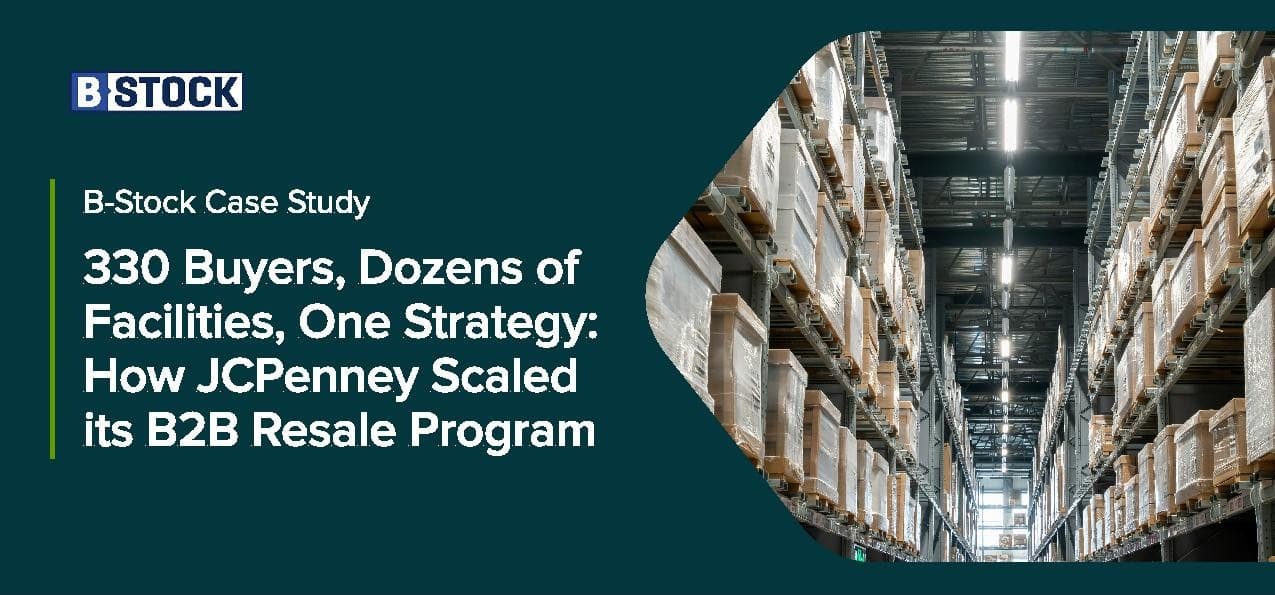
This case study breaks down how JCPenney replaced a decentralized, multi-location disposition process with a single competitive auction model — and what that shift meant for pricing, sell-through, and visibility across the program.
Results over nearly a decade of partnership:
- $572M in retail value sold
- 69% improvement in pricing over legacy solution
- 330 active buyers engaged through a branded B2B storefront
Download the case study to see how centralizing B2B resale changed the recovery equation entirely.
Listen or skim
Summaries are generated from this page’s text. Read the full piece for the detail.
More from B-Stock
All 4 →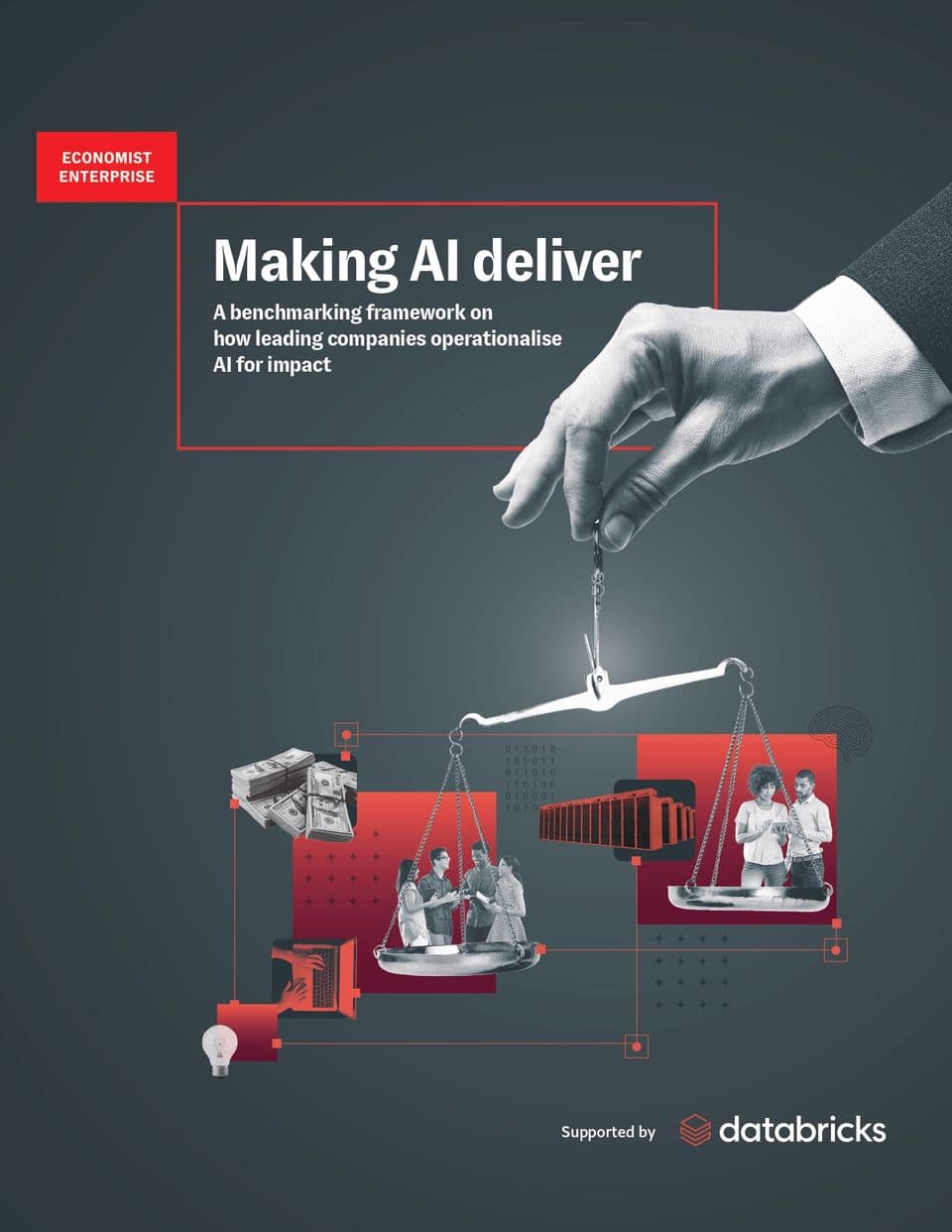
2026 Recommerce Report
When more returned and excess inventory floods into the secondary market, the instinct is to assume all that added supply softens demand and pulls pricing down with it. In the first half of 2026, buyers absorbed the
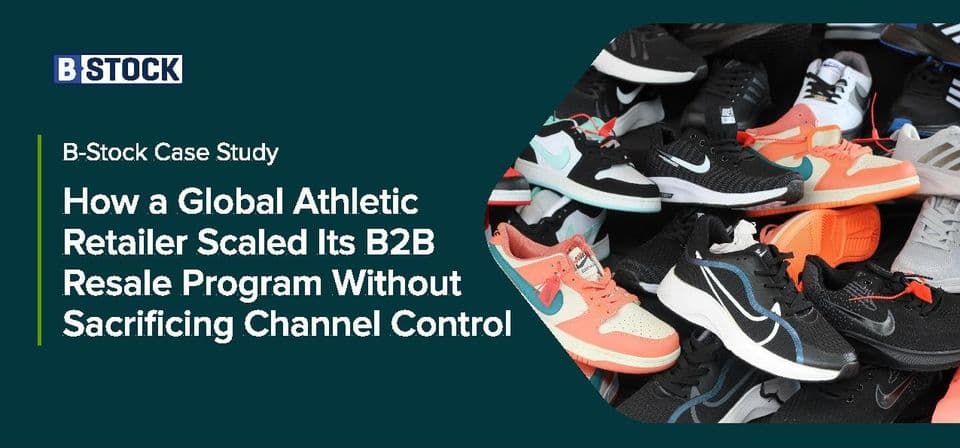
Case Study: How a Global Athletic Retailer Scaled Its B2B Resale Program Without Sacrificing Channel Control
Strict requirements around buyer eligibility and where inventory ends up typically come with a tradeoff on recovery. This program is proof that it doesn't have to work that way.

Case Study: How an Athletic Retailer Standardized Its Disposition Program for Aged Inventory, Boosting Pricing and Efficiency
When surplus inventory is managed by each location independently through a small group of jobbers, outcomes vary by facility and recovery is capped by a buyer pool that was never built to compete. The bottleneck isn't
Elsewhere in Finance, Tax & ERP
See the category →
The Total Economic Impact™ Of Avalara
The ROI of tax compliance software is no longer a guess. Forrester Consulting interviewed seven decision-makers with experience using Avalara to quantify the Total Economic Impact™.

Know Your Nexus
Stay ahead of tax risks with the right knowledge
Navigate the Shift To Audit-Ready Sustainability Reporting
The era of voluntary sustainability reporting is over. With global disclosure mandates multiplying rapidly, the margin for error has narrowed significantly. Issuers, compliance teams, and finance departments must now